If you’ve ever watched a ballet dancer effortlessly extend into an arabesque or rise into a flawless relevé, you’ve likely witnessed hypermobility in action. Joint hypermobility, the ability to move joints beyond the normal range of motion, is remarkably common among ballet dancers. But what looks like a gift on stage can sometimes come with hidden costs behind the scenes.

Just How Common Is Hypermobility in Ballet Dancers?
The numbers are striking. A study from the Royal Ballet School and Royal Ballet Company in London found that ballet dancers were 11 times more likely to be hypermobile compared to non-dancer controls. Among Brazilian ballet students and teachers, around 58% met criteria for joint hypermobility! To put this in perspective, hypermobility in the general population is estimated at roughly 10–20%.
And it may go even deeper than training. A fascinating genetic study of 51 professional ballet dancers found that 88% carried at least one variant in genes associated with connective tissue disorders: conditions that include hypermobility as a feature. This suggests that the extraordinary range of motion seen in elite ballet dancers may be partly written into their DNA.
The Paradox: Talent and Vulnerability
Here’s where it gets complicated. Hypermobility can be a tremendous asset in ballet, as it allows for the beautiful lines, extreme extensions, and fluid movement that audiences, choreographers, and artistic directors want to see. Many young dancers with generalized joint hypermobility are naturally drawn to ballet because their bodies seem made for it.
But hypermobility is not just about flexibility. It can come with:
- Reduced muscle strength: Hypermobile ballet dancers have been shown to have weaker knee extensors and flexors compared to their non-hypermobile peers.
- Impaired proprioception: The ability to sense where your body is in space can be diminished, making balance and control more challenging, especially during pointe work.
- Increased pain: Patellofemoral (kneecap) pain is especially common. In one study of young dancers with both hypermobility and scoliosis, over 90% experienced knee pain.
- Greater fatigue and psychological distress: Professional ballet dancers with hypermobility report significantly more fatigue, anxiety, and depressive symptoms than those without it.
Is hypermobility one of ballet’s greatest advantages or one of its greatest challenges? In many cases, it’s both.
The “Survivor Effect” in Professional Ballet
One of the most intriguing findings comes from a study by McCormack and colleagues of student and professional Royal Ballet dancers. While hypermobility was extremely common at all levels, the prevalence of joint hypermobility syndrome (hypermobility plus symptoms like pain and instability) actually declined from student dancers to professionals, and further declined from corps de ballet to principal dancers.
This suggests a kind of natural selection within the profession: ballet dancers whose hypermobility causes the most problems may be less likely to sustain performing careers over time. Supporting this idea, a Brazilian study found that ballet teachers were approximately three times more likely to have joint hypermobility syndrome than students, perhaps reflecting a shift from performance to teaching among those with more symptomatic hypermobility.
The Feet: A Ballet Dancer’s Foundation
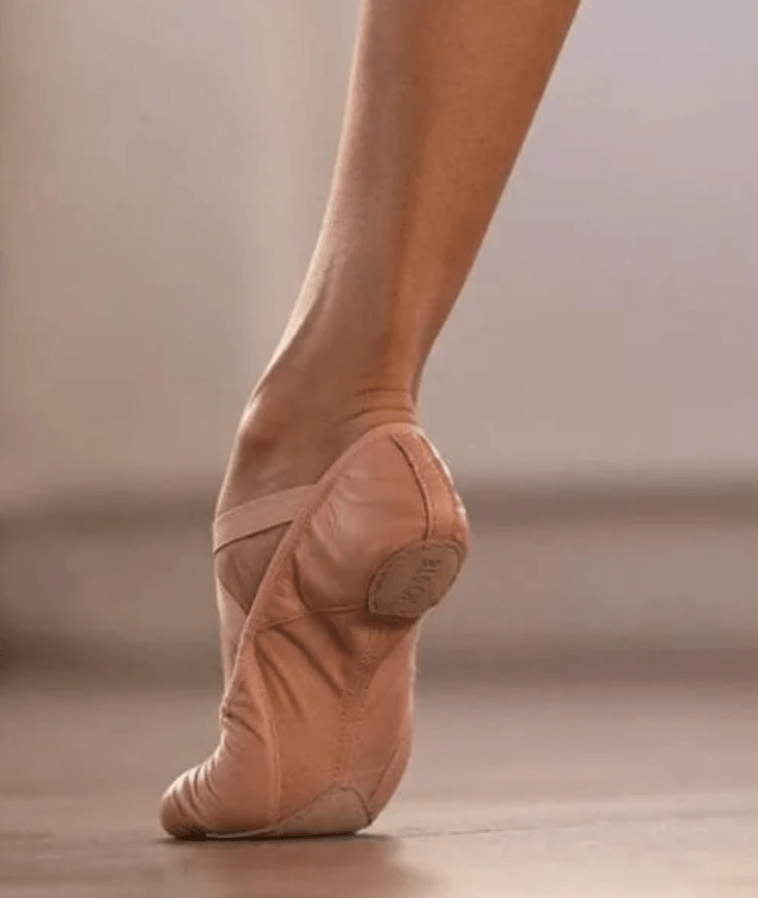
Ballet places extraordinary demands on the feet and ankles, from demi-pointe, full pointe work, jumps and landings. For hypermobile dancers, these demands can be even more challenging. Loose ligaments in the feet and ankles can lead to:
- Ankle instability and recurrent sprains
- Metatarsal stress injuries
- Flexor hallucis longus tendinopathy (“dancer’s tendonitis”)
- Achilles tendon problems
- Difficulty controlling turnout from the feet, leading to compensatory strain up the kinetic chain
If you are experiencing chronic foot or ankle pain, recurring sprains, or difficulty with pointe work, seek out a podiatrist! Ideally one experienced in treating performing artists and athletes. A podiatrist can assess your foot mechanics, identify hypermobility-related conditions, determine which conservative treatments – including physical therapy, activity modification, bracing, or custom orthotics – may be appropriate, recommend imaging when indicated, and evaluate whether surgical intervention should be considered if conservative care fails.
Practical Tips for Hypermobile Dancers
Hypermobility doesn’t have to end a dance career, but it does require a different approach to training. For dancers with hypermobile joints, the goal isn’t to gain more flexibility – it’s to improve stability and control.
- Prioritize strength over flexibility. If you’re already hypermobile, additional stretching is unlikely to improve performance. Instead, focus on strengthening the intrinsic muscles of the foot, ankle stabilizers, calves, and lower extremities to provide dynamic support for your joints.
- Train control, not just balance. Ballet class challenges balance, but supplemental neuromuscular training can further improve joint stability. Exercises such as short foot exercises, single-leg balance progressions, wobble board training, and landing drills help improve joint position sense and dynamic control.
- Don’t ignore recurring injuries. Repeated ankle sprains, persistent tendon pain, or difficulty with pointe work are not simply “part of ballet.” Early evaluation and treatment can prevent chronic problems and keep you dancing longer.
- Recovery matters. Adequate sleep, nutrition, and gradual progression of training loads are essential to help tissues recover from the repetitive demands of dance.
Considerations for Healthcare Providers
When caring for ballet dancers with hypermobility, treatment should extend beyond the immediate injury.
- Screen for generalized joint hypermobility. Tools such as the Beighton score can help identify underlying hypermobility that may influence injury patterns and rehabilitation strategies.
- Consider associated conditions. While not every hypermobile dancer has systemic symptoms, generalized joint hypermobility can be associated with conditions such as dysautonomia (including POTS), gastrointestinal disorders, mast cell activation disorders, migraines, chronic fatigue, and anxiety. Persistent symptoms outside the musculoskeletal system may warrant further evaluation or referral.
- Emphasize stability-based rehabilitation. Rehabilitation should prioritize neuromuscular control, proprioception, and progressive strengthening rather than increasing flexibility.
- Use a multidisciplinary approach when appropriate. Collaboration between podiatrists, physical therapists, athletic trainers, dance teachers, and primary care providers can help optimize both performance and long-term musculoskeletal health.
The Bottom Line
Hypermobility and ballet have a complicated relationship. The same loose connective tissue that allows for breathtaking artistry can also lead to pain, fatigue, and functional challenges. Understanding this connection and taking proactive steps to support hypermobile bodies can help ballet dancers enjoy longer, healthier careers.
If you’re a ballet dancer experiencing chronic joint pain, unusual fatigue, foot or ankle problems, or frequent soft-tissue injuries, consider talking to a healthcare provider who understands hypermobility. For foot and ankle concerns specifically, a podiatrist with experience caring for dancers can help optimize foot mechanics, guide treatment, and safely return you to dancing. It’s not about limiting what your body can do, it’s about giving it the support it needs to keep doing it.
References
- McCormack M, Briggs J, Hakim A, Grahame R. Joint Laxity and the Benign Joint Hypermobility Syndrome in Student and Professional Ballet Dancers. The Journal of Rheumatology. 2004;31(1):173-8.
- Sanches SB, Oliveira GM, Osório FL, et al. Hypermobility and Joint Hypermobility Syndrome in Brazilian Students and Teachers of Ballet Dance. Rheumatology International. 2015;35(4):741-7.
- Vera AM, Peterson LE, Dong D, et al. High Prevalence of Connective Tissue Gene Variants in Professional Ballet. The American Journal of Sports Medicine. 2020;48(1):222-228.
- Steinberg N, Tenenbaum S, Zeev A, et al. Generalized Joint Hypermobility, Scoliosis, Patellofemoral Pain, and Physical Abilities in Young Dancers. BMC Musculoskeletal Disorders. 2021;22(1):161.
- Scheper MC, de Vries JE, de Vos R, et al. Generalized Joint Hypermobility in Professional Dancers: A Sign of Talent or Vulnerability? Rheumatology. 2013;52(4):651-8.
- van Rijn RM, Stubbe JH. Generalized Joint Hypermobility and Injuries: A Prospective Cohort Study of 185 Pre-Professional Contemporary Dancers. Journal of Clinical Medicine. 2021;10(5):1007.
- Simmonds JV. Masterclass: Hypermobility and Hypermobility Related Disorders. Musculoskeletal Science & Practice. 2022;57:102465.
- Minhas D. Practical Management Strategies for Benign Hypermobility Syndromes. Current Opinion in Rheumatology. 2021;33(3):249-254.


